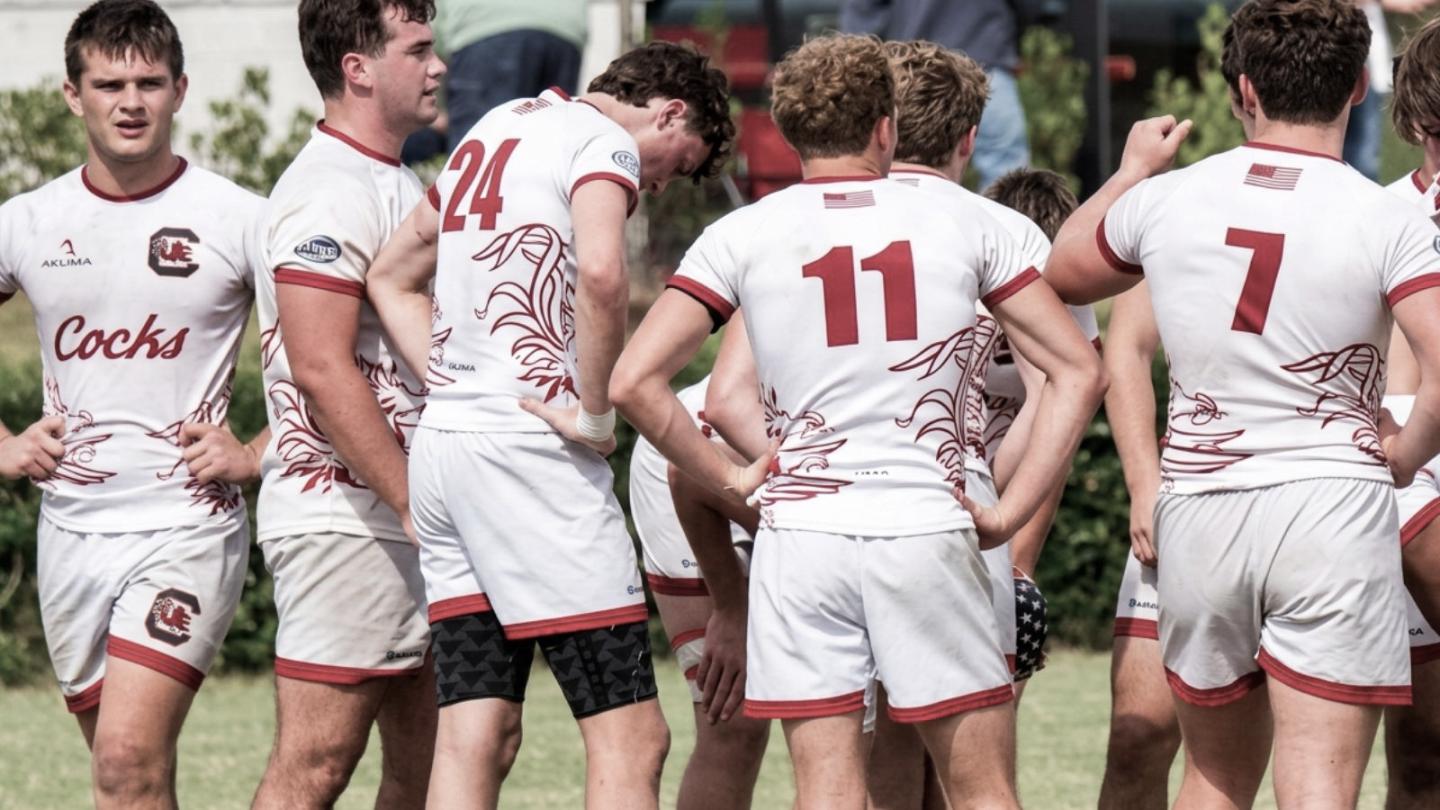
Things are changing at University of South Carolina rugby in what has been a fairly eventful summer.
Ultimately the major changes are that John Roberts, Head Coach since 2021, is out, and student leadership is exerting a bigger influence on the program, an influence they felt they should have exerted earlier.
The Gamecocks Rugby Program has for several years had one of those off-the-beaten-path relationships with the University. As a club sport that represents the school and plays at a high level (D1AA in the SCRC), the program has operated in an elevated club status.
The alumni fund two rugby-related funds, one for most of the day-to-day operations, including equipment, kit, and other team supplies.
There is also another account that covers scholarships, coach pay, and big-ticket items.
Status Changes on Campus
The program and the University have operated under a Memorandum of Understanding in which Roberts, enjoyed some status and acceptance on campus, with his being able to be an employee of the University deswpite his salary being paid by alumni.
However that MOU has been stopped by the new head of the campus recreation thanks to a fundamental disagreement with having a club coach on staff with the University.
The full status of the program on campus is fairly muddy, but that, unfortunately, is the nature of college rugby—a team can be nominally under Athletics, and yet have no say; a team can use the Athletic Department web interface, but be overseen by Student Life, or Club Sports, or Student Recreation. Some head coaches can speak directly to their Athletic Director and have respectful interactions; some programs can be treated as varsity in everything but name; others can be ignored because all clubs must have only student leadership.
Some heads of club sports understand serious sports endeavors and understand that there's a difference between on-campus-only sports and teams that represent their schools even in a non-varsity capacity. Meanwhile, other heads of Student Life equate a D1AA rugby team with that of a group putting on a Halloween party ... both are valuable, of course, but some heads of Student Life see no difference.
For South Carolina, the control of the alumni funds is a sticking point. The students may run the team, but the University has a big say, and a Head Coach always has a big say. And yet, the money is donated and controlled by those who actually aren't part of the University at all.
Student Leadership Makes a Move
The Student Leadership Group (SLG) told GRR that they had been holding onto concerns about Roberts. He had been successful both on the field and in helping recruit players and raise funds. That is not in dispute and the SLG said so. However, they also felt that they didn't get enough communication from Roberts on some aspects of the program, and held "ongoing concerns raised across the team regarding communication, organization, accountability, leadership style, team culture and the overall direction of the program."
(GRR sent a series of questions to a member of the South Carolina SLG, and we received detailed answers with the request that the entire SLG be credited with the statement. GRR also spoke with Roberts in a phone interview. We also reached out to last year's club president correction, captain not president, but received no response.)
In June, that Student Leadership Group met with the University essentially to confirm what they already felt was the case—namely that a club sport is run by the students and the students have the power to hire and fire a coach.
Once the group received that confirmation, the SLG met with Roberts and informed him that his salary would be cut back in order to ensure the travel budget was met. That meeting ended without specifics. Roberts says he wasn't told by how much his salary would be cut. Then on July 1 the leadership group announced that they would be parting ways with Roberts.
This announcement caught several, including some players, the alumni, and Roberts himself, by surprise.
However, the termination (firing, decision to part ways ...) was not dependent on any outside factors, say members of the SLG that GRR communicated with.
"It was time to move in a different coaching direction," the SLG said in a statement send to GRR. "The elected student leadership group formally carried out that decision.The university’s separate decision to terminate Coach Roberts’s Memorandum of Understanding was not requested or initiated by the team, and student leadership was not involved in that process. Independent of the university’s decision regarding the MOU, the students already had the authority to determine who coached their team."