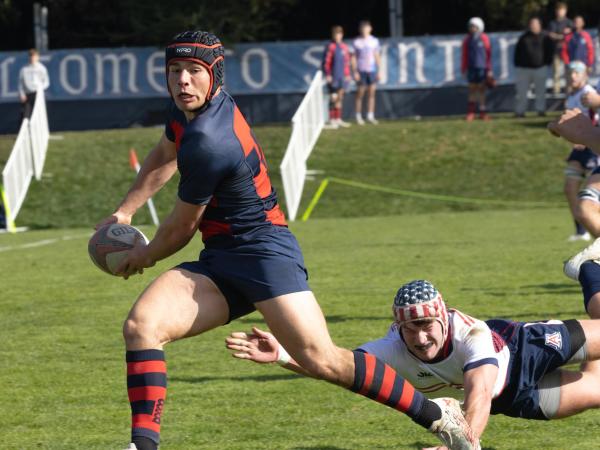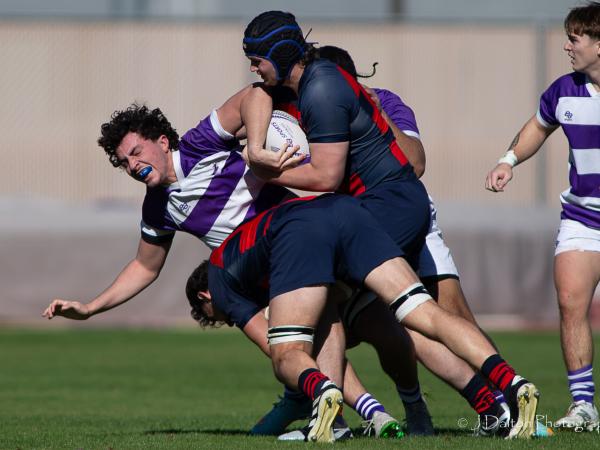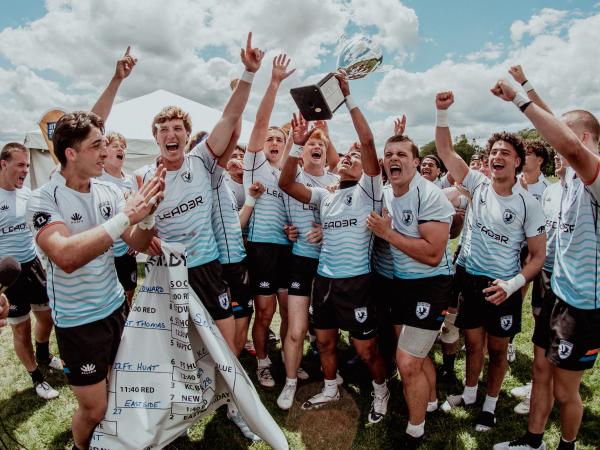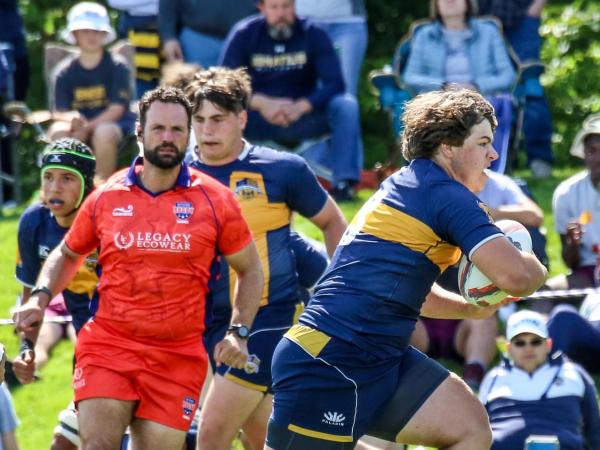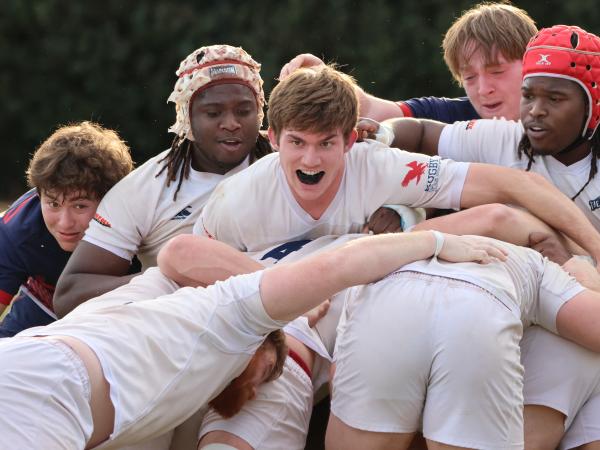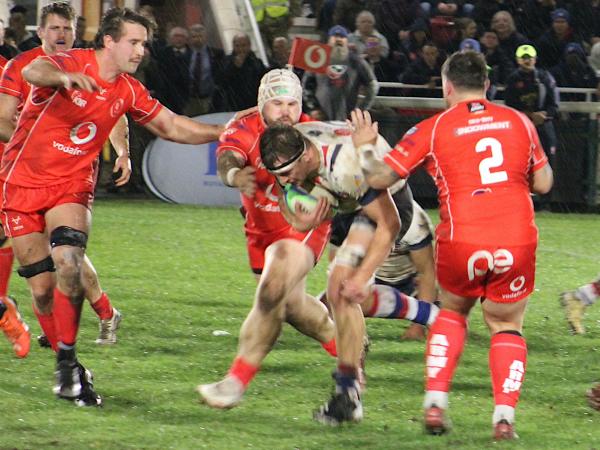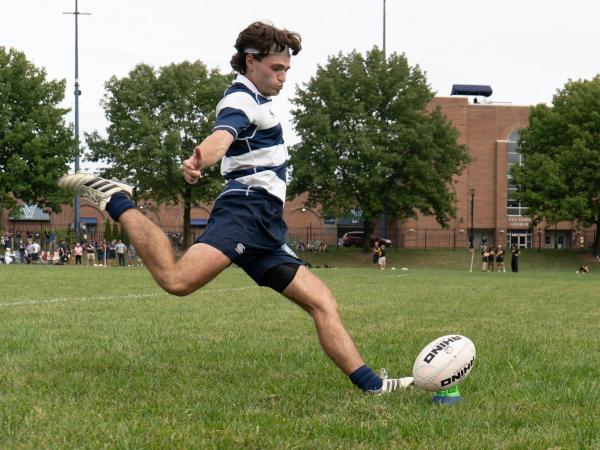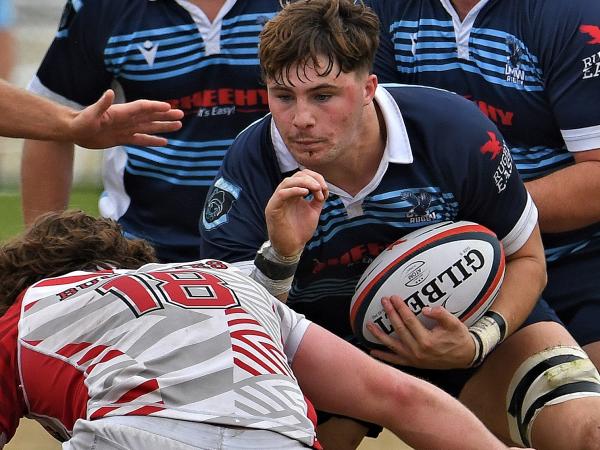

The Heart of America Conference (HOA), the D1AA division of CRAA’s Midwest Conference, enters a new chapter following a significant realignment that reshaped the landscape of Midwest collegiate rugby.
What was once a 12-team competition saw seven programs depart to join NCR’s Great Plains Conference, where Oklahoma ultimately claimed the championship. While the departure of seven teams represents a substantial change in the conference landscape, it also creates an opportunity to tell a different story about the five programs remaining in the Heart of America.
A significant part of the split centered on the desire of those seven programs to pursue a different competitive environment, one that better aligned with their immediate program-building goals. For the five programs remaining in the HOA, the priority is to compete in an increasingly demanding environment, testing themselves against quality opposition week-in and week-out while continuing to develop the resources, depth, infrastructure, and overall program standards necessary to eventually make the jump to D1A.
The result is a five-team conference featuring Iowa State, Wayne State, Iowa, Minnesota, and Principia. And while the conference standings might suggest a separation between the top and bottom of the table, the results outside conference play tell a much more interesting story.
Five Programs, One Competitive Standard
The conference table only captures part of the story. These five programs have consistently sought opportunities to challenge themselves outside their immediate competition, often against opponents playing at higher competitive levels.
Iowa State has defeated Iowa Central, an NCR D1 program, and the Omaha Goats, a quality D2 men's club. Iowa has taken down Wisconsin, another NCR D1 program. Minnesota has tested itself against a D1AA independent opponent and varsity Trine, demonstrating a willingness to put developing players in challenging environments.
These results matter because they demonstrate that the HOA is not simply a collection of teams competing within a single division. It is a group of programs actively seeking higher-level competition to measure their progress and identify what it will take to reach their next destination.
Each program is taking a different approach, but the common theme is clear: development through competition.
Iowa State: Defense Wins Championships, and Defense Controls Games
Iowa State has established itself as arguably the most complete defensive unit in the conference. Through its opening conference matches, the Cyclones have demonstrated an ability to dictate the terms of a match, control territory, and make opponents work exceptionally hard for every point.
The results speak for themselves:
48-0 victory over Minnesota
39-20 victory over Iowa
31-12 victory over Wayne State
Allowing just 32 points across three conference matches is an impressive accomplishment, particularly against three opponents with very different attacking identities.
What makes Iowa State particularly dangerous is that its defensive success is not isolated from its offensive approach. The Cyclones have shown an ability to put the ball into the right areas of the field, force opponents to play from difficult positions, and use their defensive pressure and set piece to generate scoring opportunities.
Rather than relying on explosive offensive sequences to win matches, Iowa State has demonstrated an ability to control the game through field position, defensive organization, and disciplined execution. Their set piece provides another avenue to turn pressure into points, while their defensive structure prevents opponents from building sustained momentum.
A significant part of that identity comes from the leadership and consistency of its experienced players.
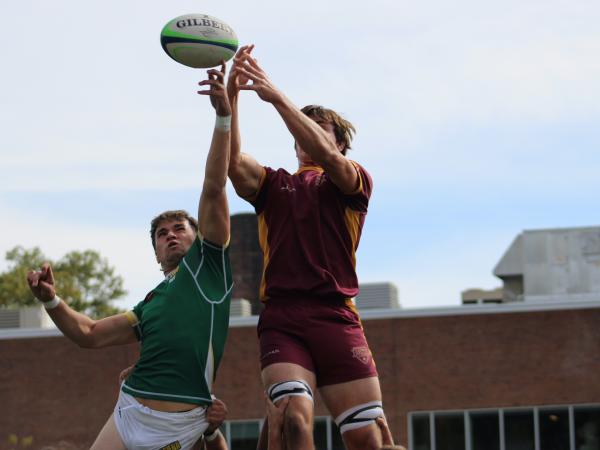
Brock Kluempers, a transfer from Central Washington, has brought an important level of consistency to the Cyclones' lineout. His work as the primary thrower has provided reliability in one of the most important areas of Iowa State's set piece, while his ability to contribute in open-field play gives the Cyclones another dimension beyond the traditional responsibilities of a lineout specialist.
In the center of the backline, All-American Jack Cahill has become instrumental to Iowa State's overall identity. His influence extends well beyond his attacking contributions. Defensively, Cahill is a critical communicator, calling assignments and organizing the players around him. Offensively, he helps direct the Cyclones' attack, making him one of the most important links between their defensive organization and offensive execution.
The individual recognition has followed that collective approach. John Braun, wearing number 8, earned Man of the Match honors in the 48-0 shutout of Minnesota, while Jack Carroll received the recognition following the 39-20 victory over Iowa. Zach English, who contributes at both flanker and center, was named Man of the Match in the Cyclones' 31-12 victory over Wayne State.
The recognition of three different players across three victories speaks to the depth of Iowa State's contributions. The Cyclones are not dependent on one individual to carry their performances; their success comes from players executing their roles throughout the lineup.
Wayne State Wildcats: An Explosive Backline
If Iowa State represents defensive control, the Wayne State Wildcats represent offensive explosiveness.
The Wildcats have shown an ability to manufacture points seemingly at will, using an athletic and dynamic backline to capitalize on opportunities and punish defensive mistakes.
Their 66-12 victory over Minnesota was the most obvious example of that attacking potential. Wayne State was able to turn opportunities into points at a remarkable pace, showcasing the kind of offensive ceiling that makes them a difficult opponent for anyone in the conference.
Much of that attacking threat begins with the work of Marlon Guwuriro, a transfer who originally came through NCR D1 Adrian. Guwuriro provides the Wildcats with a dynamic carrying threat, consistently generating front-foot ball and giving the backline opportunities to attack against defenses that are still retreating and reorganizing. His ability to win the gain line creates opportunities for the players around him and makes the Wildcats particularly dangerous when they can establish momentum through the middle of the field.
At flyhalf, Ben Donnelly provides another significant weapon. The dynamic #10 combines a strong kicking game with the ability to unleash the variety of attacking options available throughout the Wildcats' backline. His boot allows Wayne State to manipulate field position and create opportunities, while his distribution and decision-making give the team's outside backs the space to exploit defensive weaknesses.
Donnelly earned Man-of-the-Match honors in the Wildcats' 28-12 victory over Principia, while Jacob Riedmann received the recognition following their dominant 66-12 performance against Minnesota. Both performances highlighted the individual quality behind Wayne State's impressive attacking output.
Even in their 31-12 loss to Iowa State, the Wildcats demonstrated that they possess the personnel to challenge quality defensive sides. The difference was Iowa State's ability to limit those opportunities and control the areas of the field where Wayne State is most dangerous.
The Wildcats have the kind of attacking talent that can change a match in a matter of minutes. As their ability to marry that offensive production with consistent defensive performances continues to develop, they will remain one of the most dangerous teams in the HOA.
Iowa: Experience Meets a Promising New Generation
Iowa has assembled an interesting combination of experienced players, dynamic talent from multiple competitive backgrounds, and an impressive incoming freshman class.
The Hawkeyes have demonstrated that they can compete with the best teams in the conference, earning a 20-19 victory over Principia and pushing Iowa State in a 39-20 defeat.
Their narrow victory over Principia was particularly telling. Against a side capable of changing its shape and frustrating opponents, Iowa found a way to produce a result in a match decided by a single point. Sam Zimmermann earned Man of the Match recognition in that contest, an important individual contribution in a performance that required Iowa to find a way through a difficult opponent.
Zimmermann is also one of the defining players within the Hawkeyes' program. As captain and a staple in the front row, he provides consistency across virtually every aspect of play. His value is not limited to a particular phase or moment of the game. He brings reliability to the set piece, physicality to the forward pack, and the kind of steady presence that helps an experienced team navigate difficult stretches of a match.
Another important addition to Iowa's attack has been Hudson Vreough, who previously transferred from Iowa Central. Vreough brings a physical presence to the Hawkeyes' offensive game, giving them another player capable of challenging defenders and generating momentum. His background and experience provide another layer to a team that has made a point of combining different competitive experiences.
The Hawkeyes' success comes from the combination of experienced players who understand how to manage difficult situations and younger talent that brings energy and athleticism to the lineup. Their ability to draw on players with experience at different competitive levels gives them a unique advantage as they continue to integrate their freshman class.
With Zimmermann providing leadership, Vreough adding physicality, and a strong freshman class supplementing an experienced core, Iowa has the pieces to remain competitive while building toward the future.
Minnesota: Building the Foundation for the Future
Minnesota may not have the conference results it ultimately wants, but its approach this season deserves considerable attention.
The Gophers are in the process of rebuilding and have made a deliberate commitment to testing a majority of impressive freshmen and sophomores against quality opposition. Rather than protecting a young roster from difficult matchups, Minnesota has consistently put its developing players in environments that demand growth.
That means facing established programs and top-20 competition week in and week out, learning through difficult matches, and accelerating the development process.
While the results against Iowa State, Wayne State, and Principia have been challenging, the Gophers have several young players who demonstrate why the future remains promising.
Evan Maier, a transfer from Nebraska, has quickly become one of the most important players in the Minnesota backline. The explosive center is only a sophomore, but he has already become the first name on opposing scouting reports when teams prepare to face the Gophers. His ability to threaten defenses with the ball in hand gives Minnesota an attacking weapon that can create opportunities even against established opposition.
At fullback, sophomore Diego Serrano is another player worth watching. He has shown flashes of becoming the next elite fullback to come out of the Heart of America Conference, a competition that has produced standout players such as Ren Heimer and Ian Klein in recent years. Serrano's development gives Minnesota another potential building block in its backline and a player who could become increasingly influential as the program matures.
Minnesota's 19-57 loss to Principia showed that the Gophers can generate offense and find opportunities even against experienced opposition. Principia's number 8, Charles Luhanga, earned Man of the Match recognition in that contest, highlighting the individual quality of a Principia side that has found ways to turn its physical presence into points.
Meanwhile, the Gophers' performances against Iowa State and Wayne State have provided an opportunity to identify the physical, tactical, and organizational improvements necessary to compete at this level.
For Minnesota, the conference season is about more than the current standings. It is about establishing a foundation that can support a much more competitive team in the coming seasons.
When a program is rebuilding, meaningful development often requires taking its lumps against quality competition. Minnesota appears committed to that process, and the experience its younger players are gaining now could pay significant dividends in the near future.
Principia Thunder Chickens: A New-Look Side With an Imposing Identity
Perhaps no program in the conference has undergone a more interesting roster transformation than Principia.
Led by Head Coach Peter Lang, who has emerged as an odds-on favorite for HOA Coach of the Year, the Thunder Chickens have successfully brought together transfers from the now-defunct UHSP university program with holdovers from Principia's previous NCR D1 days.
The result is a physically imposing and tactically versatile team that presents a difficult challenge for opponents.
Principia's ability to operate in different shapes gives it the flexibility to frustrate teams and disrupt their preferred attacking structures. Rather than relying on a single style of play, the Thunderchickens have shown an ability to adjust their approach based on their opposition.
The engine behind much of that attack is the forward combination of Max Leaitua, Zac Henderson, and Luigi Furlan. The three provide the Thunderchickens with the go-forward platform necessary to establish their attacking identity. Their ability to generate momentum and get the team moving forward creates opportunities for the players around them, while giving Lang the flexibility to build his attack through different shapes and combinations.