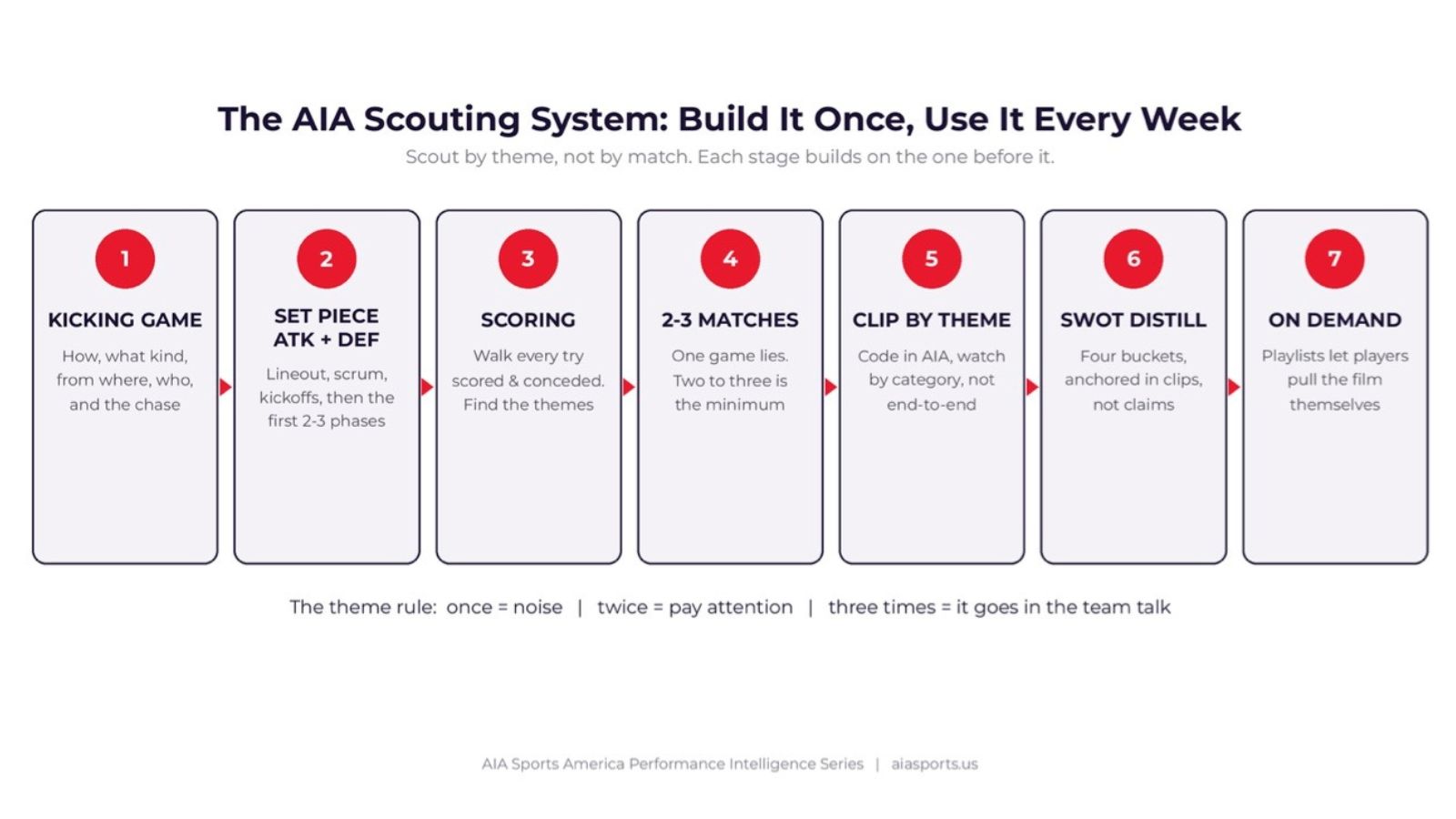
A simple system for competitive analysis that players actually absorb.
This article is Presented by AIA Sports America for Goff Rugby Report
The Problem Is the Volume, Not the Opponent
Every coach knows they should scout the next opponent. The honest version is usually one match watched late on a phone and a team talk built on “they’re big up front, watch their 10.”
That is a hunch wearing a clipboard.
The instinct to fix it is to watch more. Wrong correction. The programs that scout well do not always watch the most film. They watch with a structure that tells them what they are looking for before they press play, and they throw out everything that does not repeat.
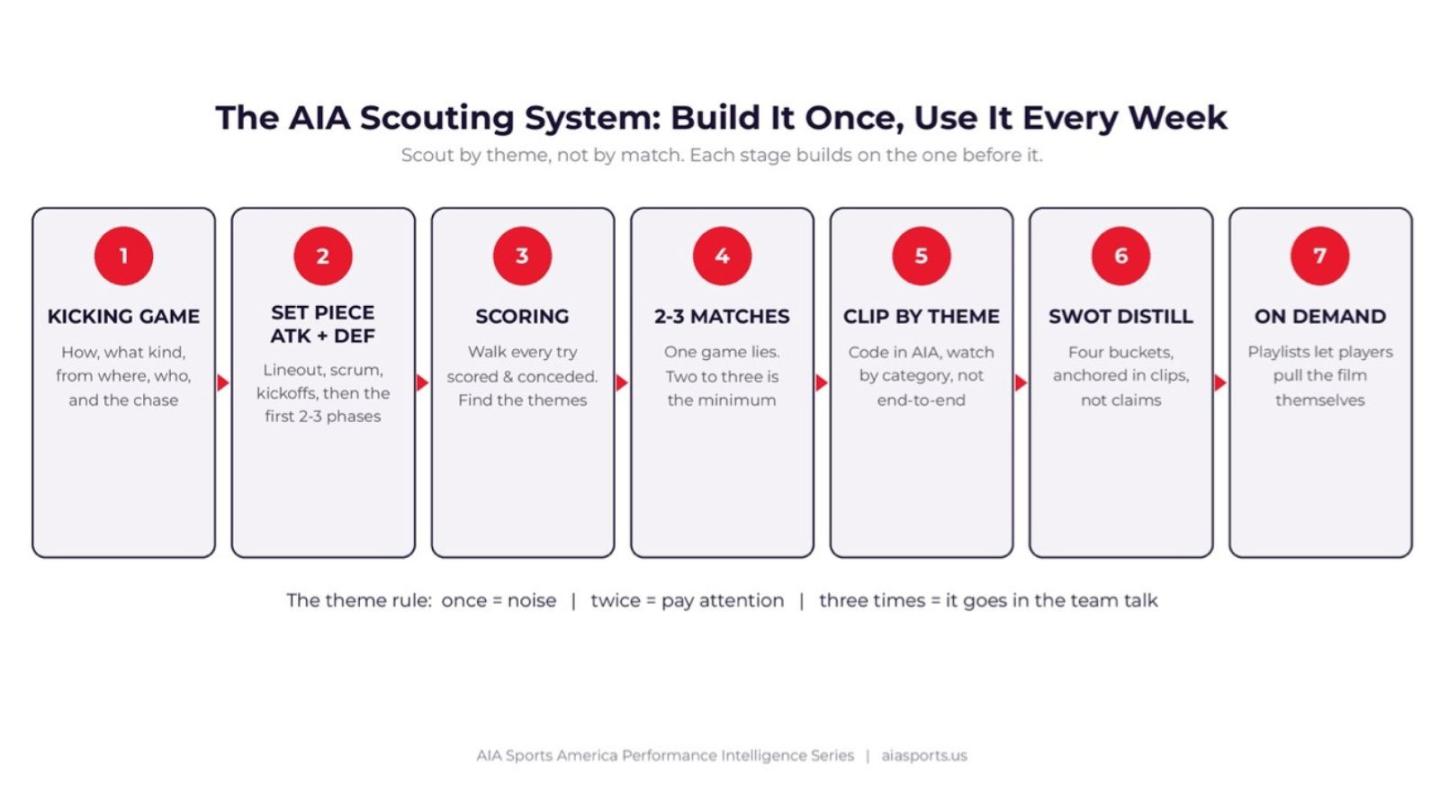
Start With the Kicking Game
The fastest read on any team is how they kick. It exposes their whole intent: territory or ball in hand, where they feel safe, who they trust to make decisions. Answer a short list before anything else:
• How do they kick? To compete, or to clear?
• What kinds? Box, contestable up-and-under, territorial touch-finder, cross-field, grubber in behind.
• From where? Do they exit the same way every time inside their 22? Do they exit better from the right side or left side of the field?
• Who kicks? Only the 10, or do the 9 and 15 share it? What happens when the main kicker is under pressure?
• What does the kick chase look like? A kick is only as good as the players running after it.
A team that kicks the same way, to the same place, with the same chase gives you a clear picture on how to counter. Use this information to brief your team and put it into practice.
Visit aiasports.us for more information>>
Then the Set Piece, Attack and Defense
Look at kickoffs, kick receipts, scrums, and lineouts on both sides of the ball, and the order matters.
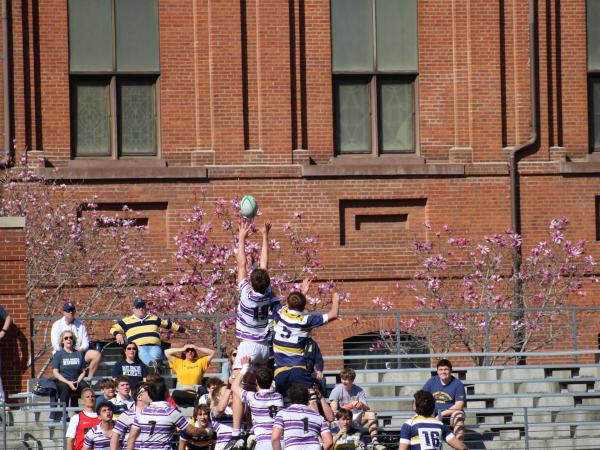
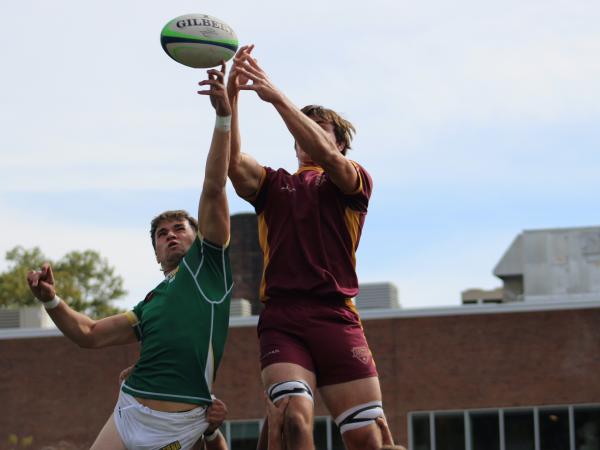
Start with the forwards’ picture. Is the lineout a weapon or a liability? How many do they throw to, who is the primary jumper, drive or off the top? Is the scrum a penalty weapon or a survival job? On kickoffs, do they contest or kick it deep?
Then watch the first two or three phases after each set piece. This is the part most scouts skip. The forwards’ technique tells you if they win clean ball. What the backs do next tells you the actual plan: the strike play, the shape out wide, whether there’s an out-the-back option or just a flat crash into the 12 channel. Do it for attack and
defense. The soft edge often lives in their first-phase defense off a scrum.
Then How They Scored and Conceded
Walk every try they scored and conceded, and look for themes. A theme is not one good moment, it’s a pattern. If it happens once, it’s noise. Twice, pay attention. Three times, it’s a theme and it goes in your team talk. One intercept means nothing. Three tries that all started from a turnover in the same channel is a plan.
Themes are the whole point. Anything that doesn’t repeat gets cut.
Watch Enough to Trust the Pattern
You cannot spot a theme in one match. A single game is distorted by weather, the referee, and whoever they played. Two to three matches is the minimum.
That is a lot of film, and there’s no trick that makes it less. Someone still has to code those matches, tagging the kickoffs, exits, set piece, and tries. What changes is what you do with it once it’s done. Clip the matches in AIA, then watch by category instead of by match.
Pull every kickoff from the last three games and watch them back to back. Inside two minutes you see how they kick, what the chase looks like, and where the space is. Twelve kickoffs in sequence reveal a pattern that three full
matches end-to-end will bury. You’re not watching less film. You’re watching it in the order that makes the themes obvious.