06.30.2026College Men
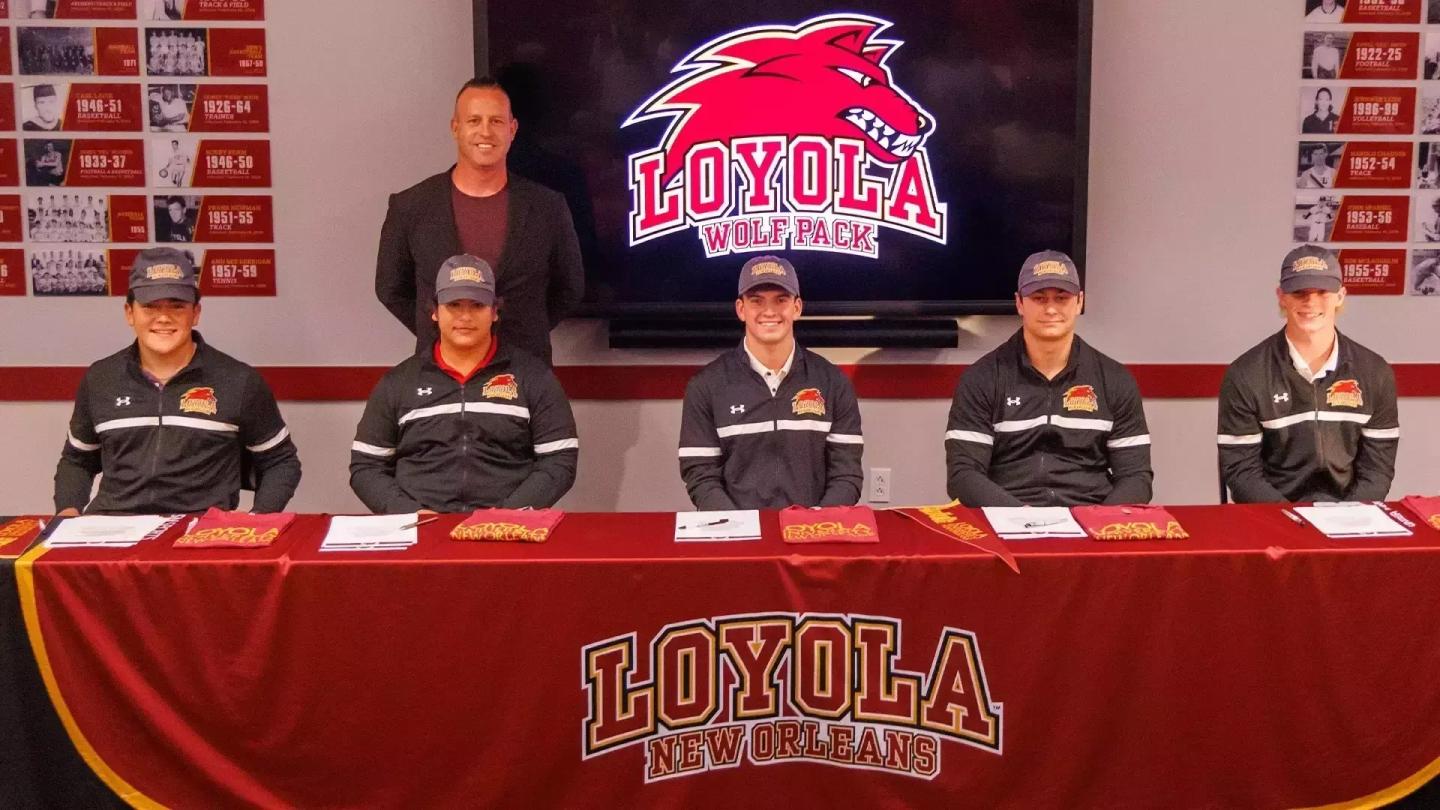
Loyola DOR Ryan Fitzgerald with his first five recruits back in October.
Author: Alex Goff

The news that Loyola University of New Orleans is joining CRAA isn't necessarily earth-shattering, but it does illustrate something interesting.

First off, the announcement is here, per the College Rugby Association of America:

The College Rugby Association of America (CRAA) is pleased to announce that Loyola University New Orleans has joined the organization and will compete as a D1AA independent beginning in the upcoming season.

Loyola will face a slate of regional opponents as they establish their competitive footprint, using the independent pathway to build depth, strengthen operations, and position the program for long‑term success. The Wolf Pack enter CRAA with a clear ambition: progressing toward D1A as performance, resources, and institutional alignment continue to grow.

“Loyola brings strong energy, ambition, and a commitment to high‑performance development,” said Scott Zavrel, D1A Commissioner. “We’re excited to support their trajectory and integrate them into the broader collegiate rugby ecosystem.”

CRAA looks forward to welcoming Loyola into competition and supporting their continued growth within the national structure.

All of that is nice PR for CRAA and part of the ongoing trend we see of organizations touting one team's decision to go one way or the other, but here is the real story.


Loyola, having moved to varsity status just a year ago and building a program from scratch, is not choosing to play in D3 or D2 and build a big pile of wins to feel good. Instead, DOR Ryan Fitzgerald (who is someone not lacking in confidence) has put his team in D1AA right off the bat.
Collegiate rugby history is full of teams that started their school-supported or varsity journey in D2, won a championship or came close, often winning their conference by a wide margin, and then moving up. The logic behind that was that the team needed to build confidence and the school needed to have confidence in the program.

It also just felt good and looked good to win.

Loyola, instead, is going into a higher level first. Should they be in D1A? We know that's the goal, but D1A is not going to allow a program sight-unseen to join. D1A teams need quality and also depth—the vast majority of D1A teams have rosters over 55 or 60. 

As a scholarship-offering program, Loyola will probably end up in D1A, but they need to prove themselves to D1A first.

One other factor in this decision by Loyola is that NCR insists that school-supported programs should be in D1. But this is a first-year program, and they do need proof of concept ... just not in D2 or D3. 

Photo Galleries

Spotlight